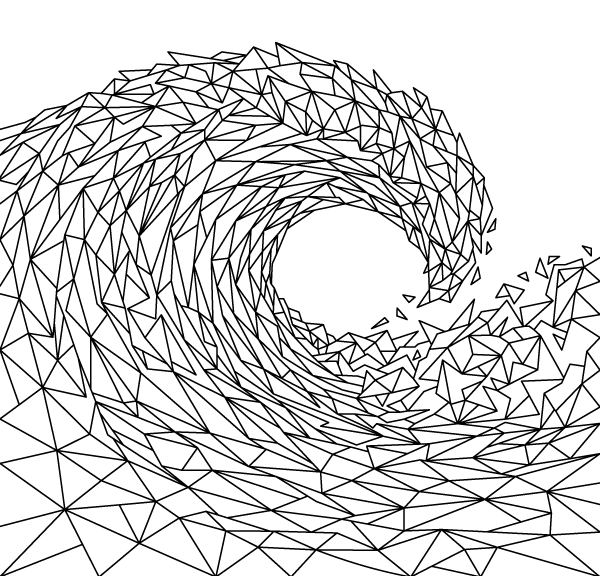
Ocean waves are shaped not only by wind but also by the depth and contours of the seafloor, which can cause waves to bend, slow, and change direction as they approach shore. A breaking wave curls when its lower portion is slowed by shallower water while the upper part continues moving forward, eventually causing the crest to overturn.
This coloring page focuses on that curling stage, with the wave forming a large arc that opens toward a bright central hollow. The crest sweeps from the upper left around toward the center, while the lower section spreads across the foreground in overlapping layers. Instead of smooth water textures, the wave is divided into hundreds of angular facets, creating a geometric interpretation of the changing surfaces and energy within a breaking ocean wave.
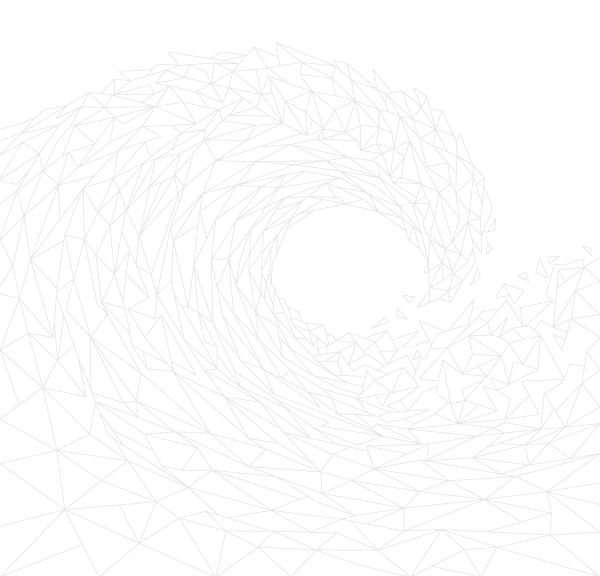
Begin by tracing the basic shapes that form the Geometric Ocean Wave. This tracing page introduces the main outlines of the dome, minaret, and building structure, making it easier to understand the overall design before adding smaller details. Trace each line carefully to build confidence, improve pencil control, and create a solid foundation. When you're finished, continue to the Detail Guide to complete the architectural features.
Geometric Ocean Wave Detail Guide
After tracing the basic shapes, use this Detail Guide to complete your Geometric Ocean Wave drawing. Follow the guide to add the geometric panels, windows, arches, decorative patterns, and other architectural details that bring the mosque to life. Work through the illustration one section at a time, using the traced outline as your foundation. This step helps improve observation skills while creating a clean and detailed geometric architectural drawing.
Drawing & Coloring Tip
The strongest feature of this design is the large spiral-like curl, so use the direction of those facets to guide your shading. Begin with the outer crest and follow the curved bands inward toward the hollow center, gradually shifting from lighter to darker blues as the wave folds over itself. The deepest area beneath the curling crest can use the darkest values, while the exposed upper ridge can remain lighter to suggest sunlight catching the water. The numerous narrow triangular facets are ideal for subtle value changes rather than completely different colors in every section.
For a natural ocean palette, combine deep navy with cobalt and turquoise, using pale blue or white near the breaking edges. A tropical version can use aqua, turquoise, and sea green, while a stormier wave can rely on slate blue, deep teal, and gray. You can also introduce a small amount of muted green in the lower water where reflected light would be visible.
The scattered angular fragments near the right side of the opening can be colored with very pale blue or white to represent spray and foam. Colored pencils are particularly useful because the many small facets require controlled shading. Smooth paper will also help keep the dense network of thin lines clean while allowing layered blue tones to blend across the larger surfaces.