Mandalas have been used for centuries in Hinduism and Buddhism as symbolic diagrams, where carefully arranged geometric patterns represent balance, order, and the relationship between the center and the surrounding world. Although traditional mandalas vary widely across regions and artistic styles, many are constructed by repeating motifs around a single central point so that every section maintains radial symmetry.
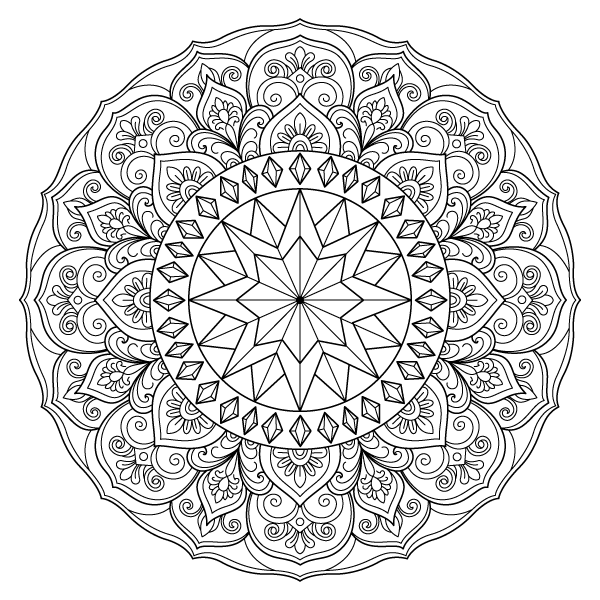
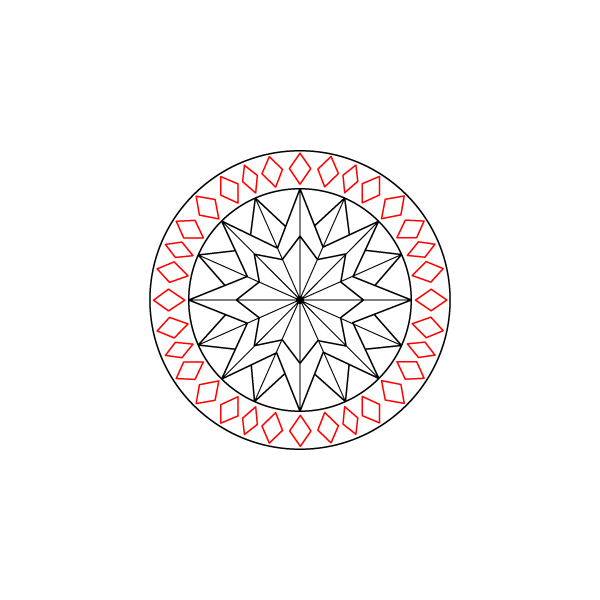
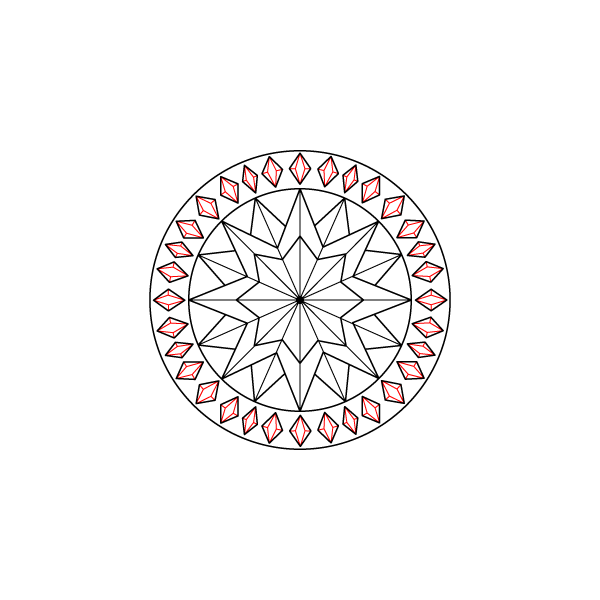
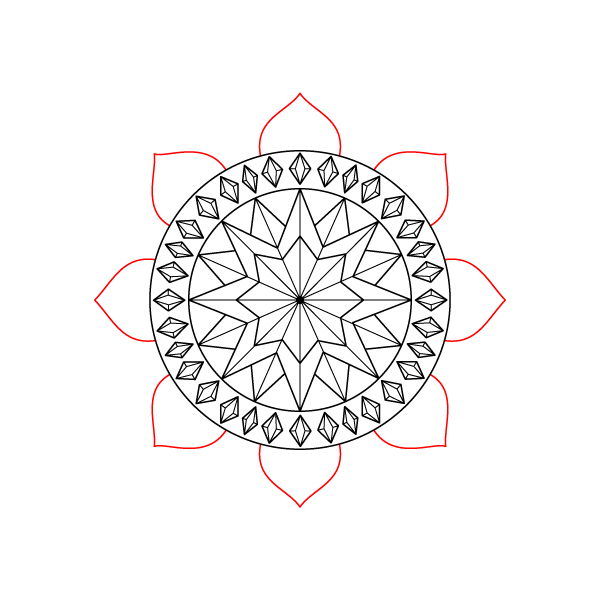
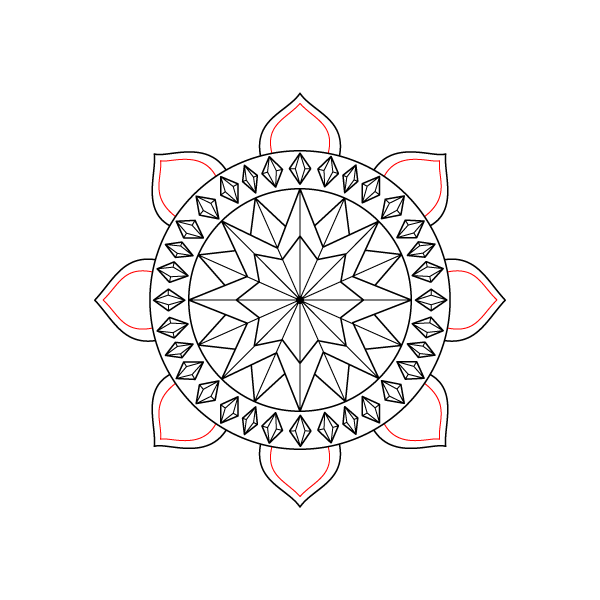
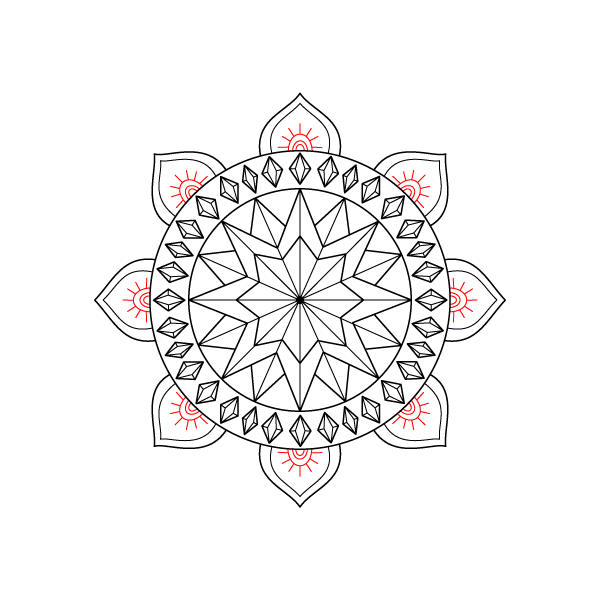
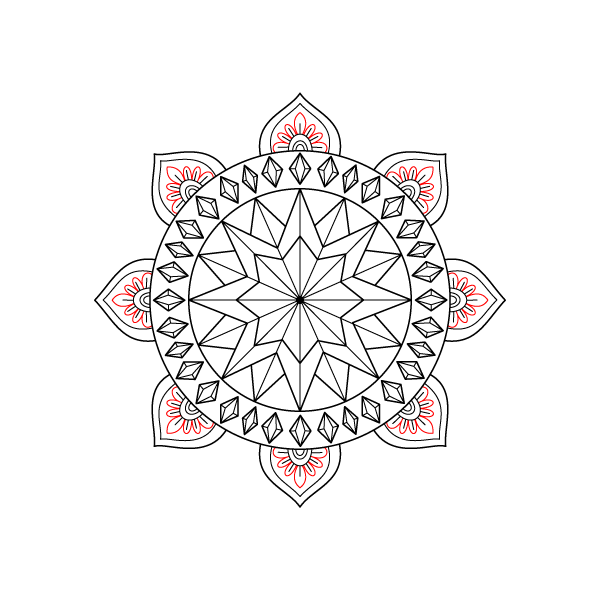
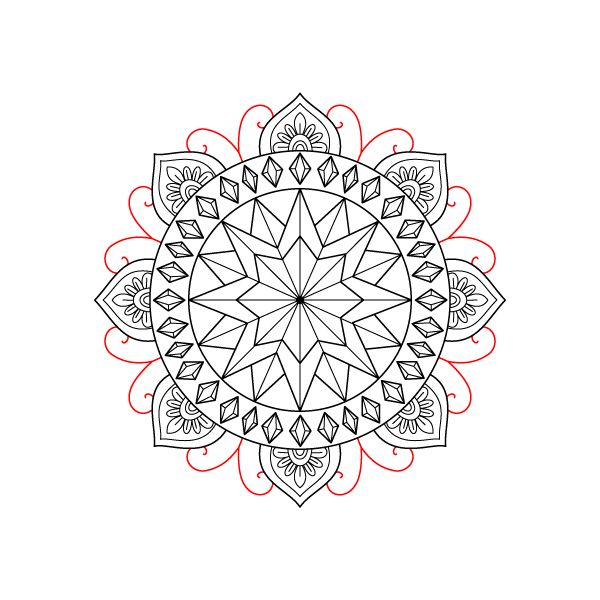
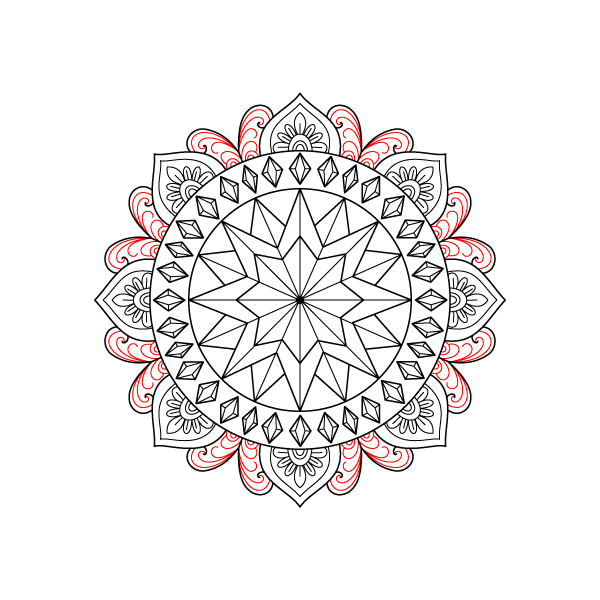
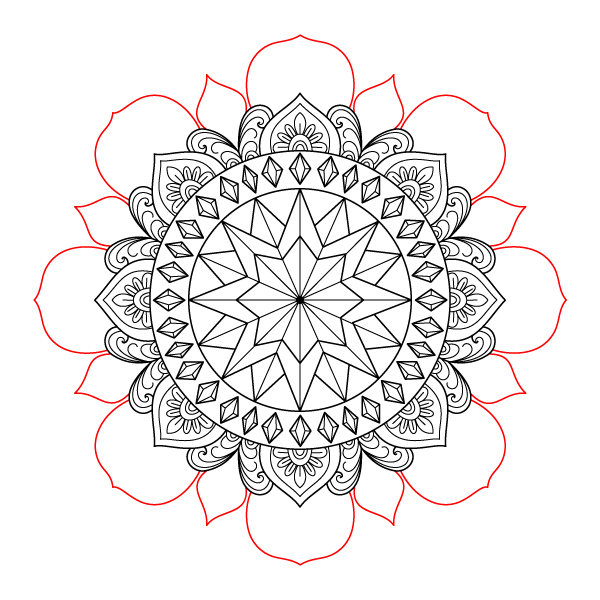
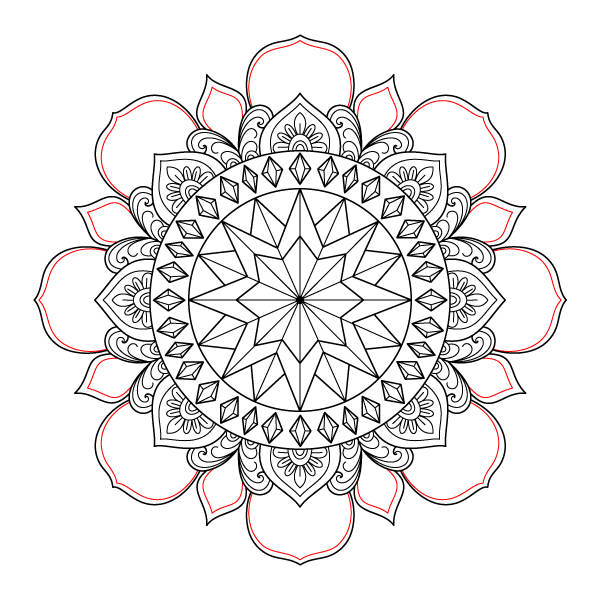
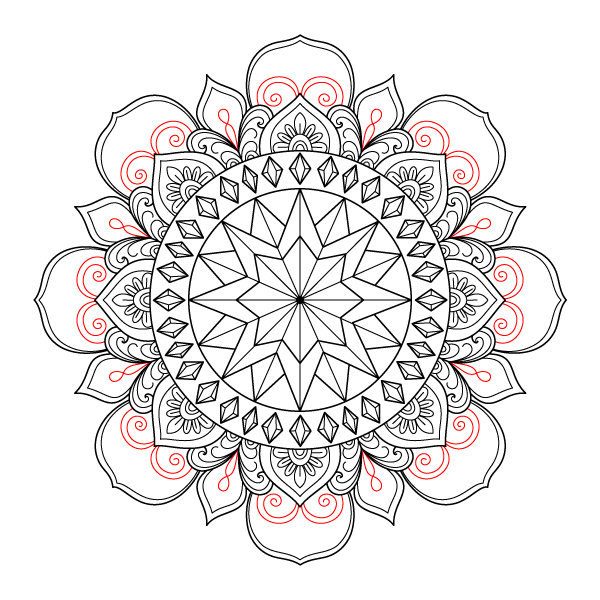
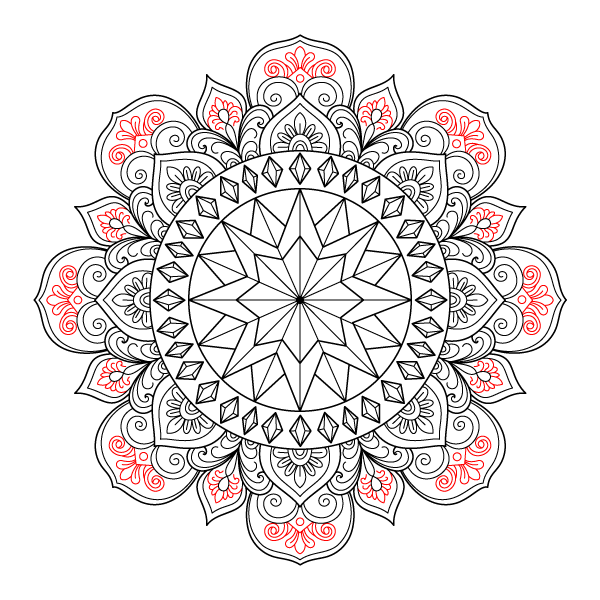
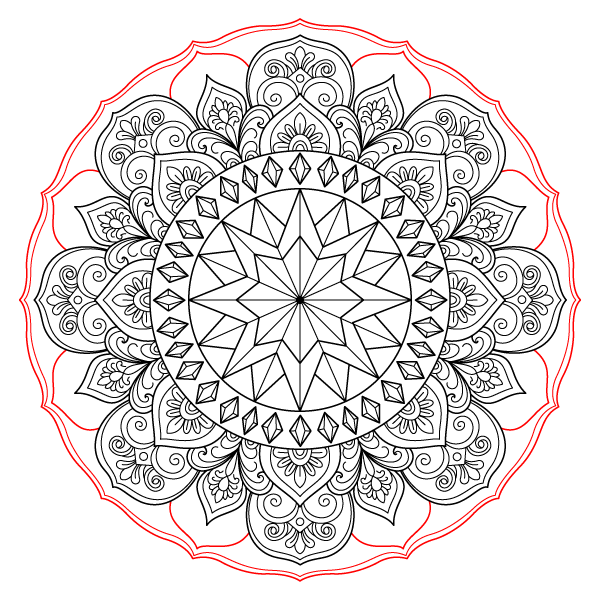
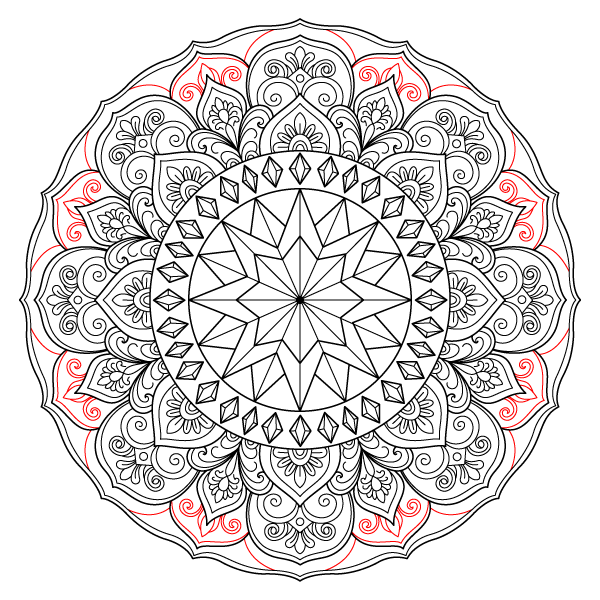
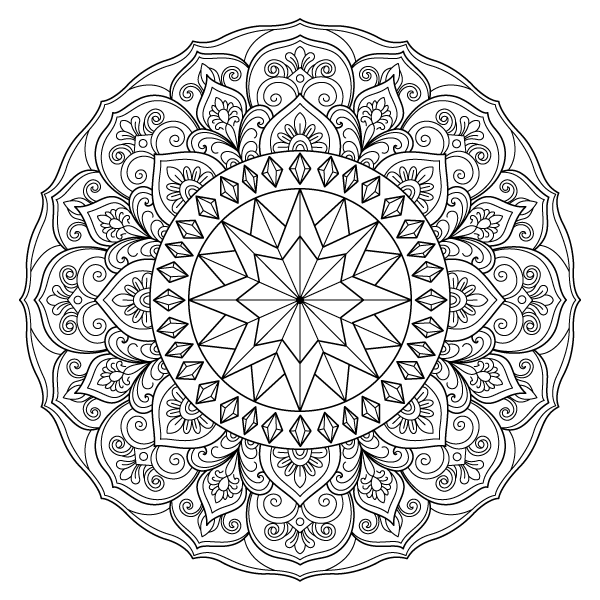
This coloring page follows that principle with a faceted eight-pointed star placed at the center, surrounded by a ring of small diamond-shaped elements before expanding into an outer border of scrolling floral motifs and layered petals. The contrast between the angular star and the flowing ornamental border gives the design two distinct visual rhythms while preserving perfect symmetry throughout the circle. Rather than relying on repeated petals alone, the central geometric star introduces crisp polygonal facets that resemble a cut gemstone, making the transition from the structured center to the intricate floral edge a defining characteristic of this particular mandala.
Because this mandala combines a geometric center with highly decorative outer layers, treat the two sections differently to emphasize their contrast. Begin with the faceted eight-pointed star, shading each polygon individually while keeping the facets nearest your chosen light source lighter than those opposite it. This creates the appearance of a cut crystal before you move outward to the surrounding rings. The circle of small diamond-shaped motifs works well as a repeating accent color that visually separates the center from the floral border, so keep those elements consistent all the way around the design.
Several traditional color palettes suit this composition. Deep sapphire blue paired with gold reflects colors commonly found in ornamental manuscripts and decorative art. Emerald green with warm bronze creates a rich botanical feel that complements the surrounding scrollwork, while ruby red with ivory produces strong contrast around the central star. For a softer interpretation, combine lavender, dusty rose, and muted teal across the floral layers while reserving a brighter tone for the star itself. Colored pencils are particularly effective on this design because the fine scrolls and narrow petal details are closely spaced. Working on smooth paper helps preserve those thin lines and allows controlled blending within the larger geometric facets without accidentally filling the delicate ornamental spaces.