The lattice crust used on many fruit pies is more than decoration: the woven strips allow steam from the filling to escape while leaving openings through which the fruit remains visible. Lattice pies became especially associated with American and European baking traditions, although variations appear in many regional pastry styles.
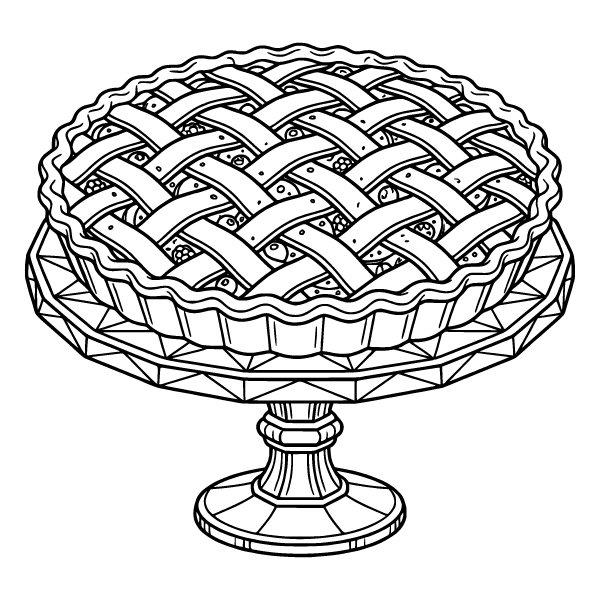
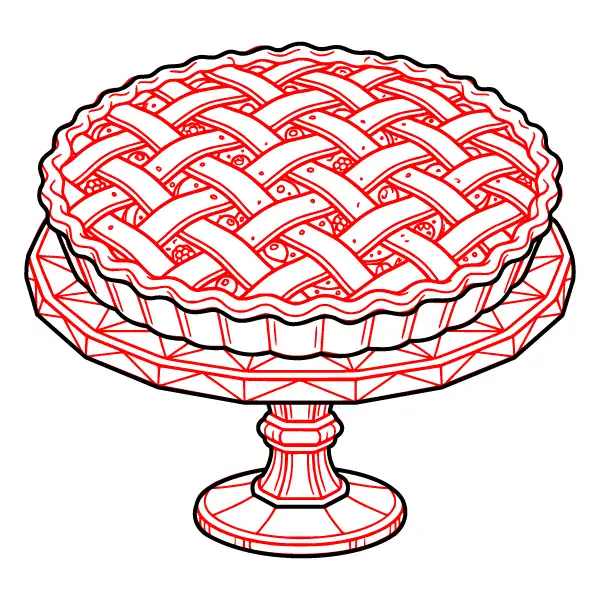
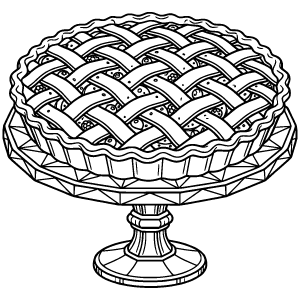
This coloring page centers that traditional woven crust pattern on a round pie, with the intersecting strips creating a repeated over-and-under structure across the entire top. A scalloped pastry edge surrounds the filling, while the pie sits on a raised pedestal stand with a faceted rim and narrow stem. The combination of the tightly repeated lattice and the geometric stand gives this particular design a strong contrast between detailed pastry texture and structured servingware.
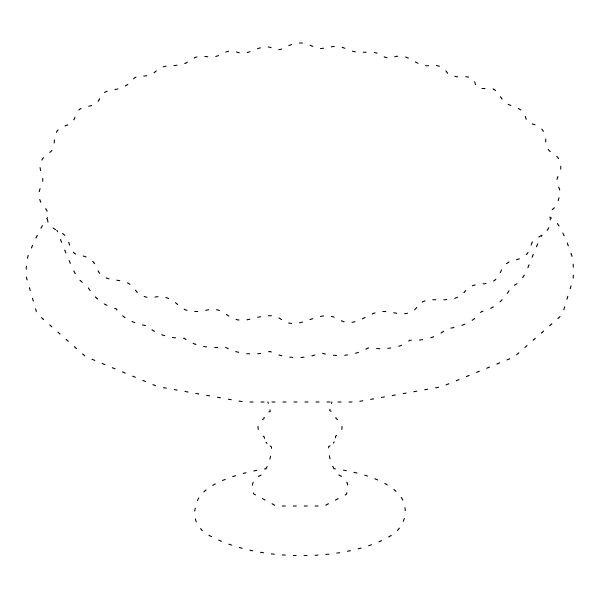
Trace the main rounded layers of the pie first, following the wide, shallow crust from the top down to the lower base. Pay attention to how the pie sits on a narrow stem that widens into a flat oval foot, keeping the upper layers centered over the pedestal. This simple outline establishes the full stacked shape before the decorative details are added.
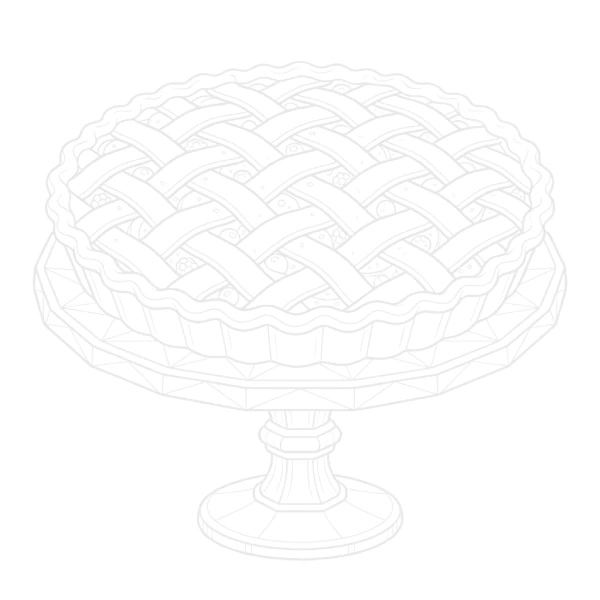
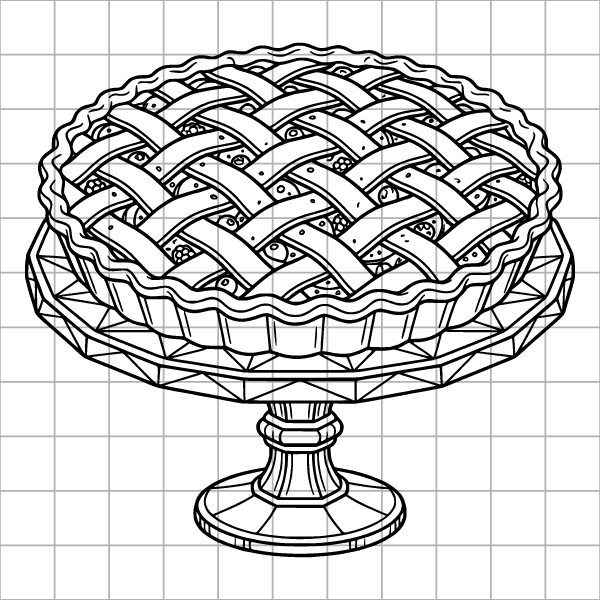
Layered Pie Detail Guide
Use the Detail Guide to add the woven lattice crust, layered pastry edges, and geometric lines around the lower pie. The lattice across the top has the highest line density, so leave it for the final, most careful pass. The pedestal foot is the simplest section and makes a good starting point before working upward into the detailed crust.
Drawing & Coloring Tip
The lattice is the most detailed part of this pie, so treat the woven strips as alternating bands rather than coloring the entire surface at once. Choose one direction of strips and give them a slightly lighter value, then shade the crossing strips a little darker. At each intersection, keep the band that appears to pass underneath slightly deeper in tone; repeating this consistently will make the over-and-under weave much easier to read. The small decorative dots between some of the strips can be left lighter to suggest highlights or tiny pieces of fruit visible through the crust.
For a classic apple pie, use warm golden brown, caramel, and deeper cinnamon brown for the crust, with muted red or green hints in the filling. A cherry pie can use rich red and burgundy beneath a golden pastry crust, while a blueberry version works with deep blue, violet, and warm brown. For pumpkin pie, combine orange, ochre, and cinnamon tones.
The scalloped outer crust can be slightly darker underneath the rim to emphasize its thickness. The pedestal stand is separate from the pastry, so a neutral gray or silver finish can create a metal appearance, while cream and blue can suggest glazed ceramic. Colored pencils are particularly useful for the lattice because a sharp point lets you shade narrow strips without crossing the surrounding outlines. Smooth paper will also help preserve the small decorative details across the dense upper surface.