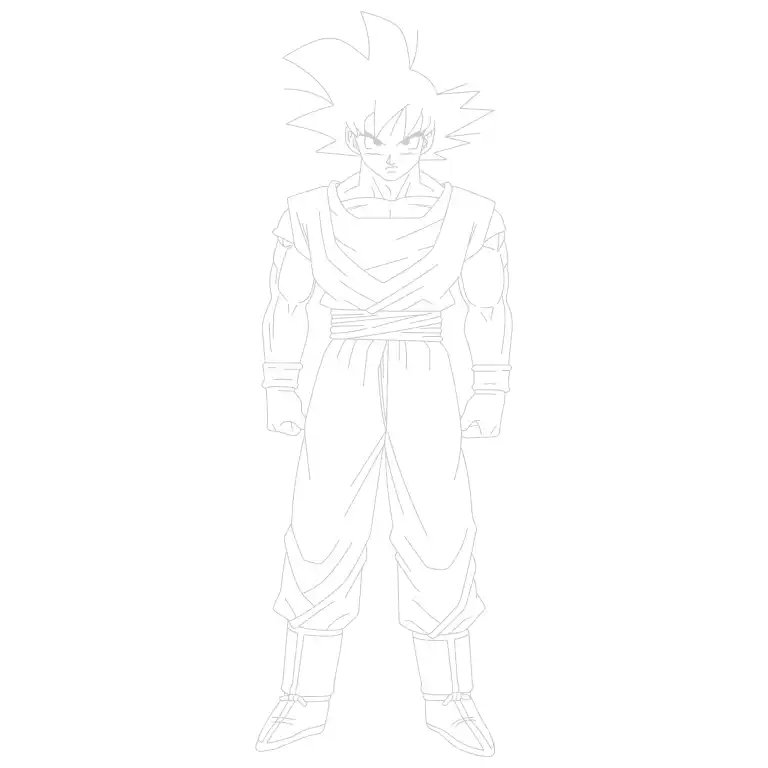
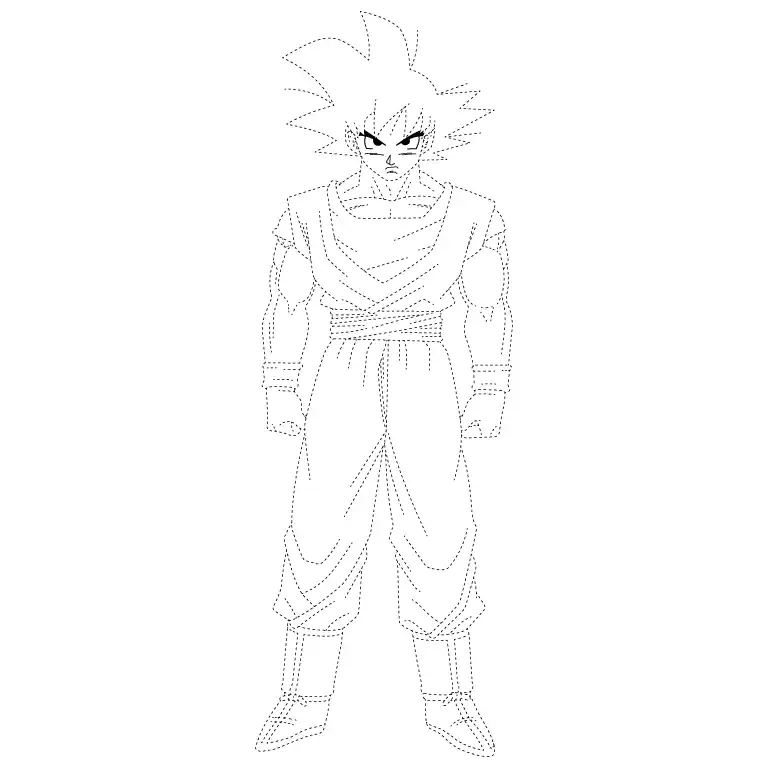
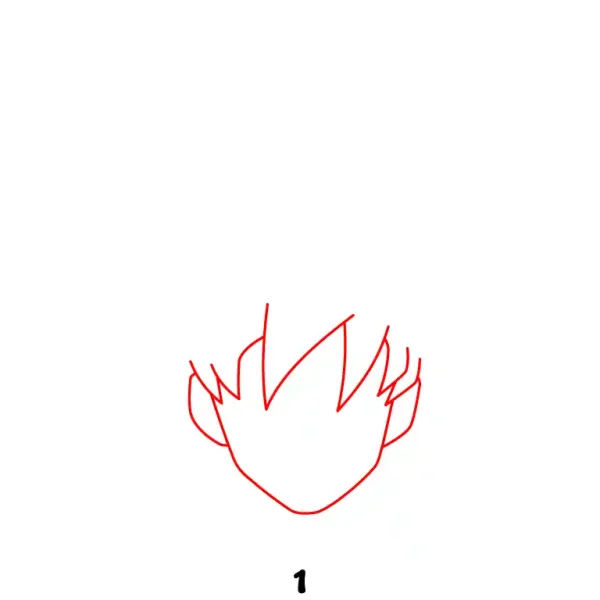
Begin by sketching the basic outline of Goku’s face, keeping the shape balanced and proportionate. Add the spiky outline of his hair on top, making the points sharp and uneven, and include the ears on both sides of the head.
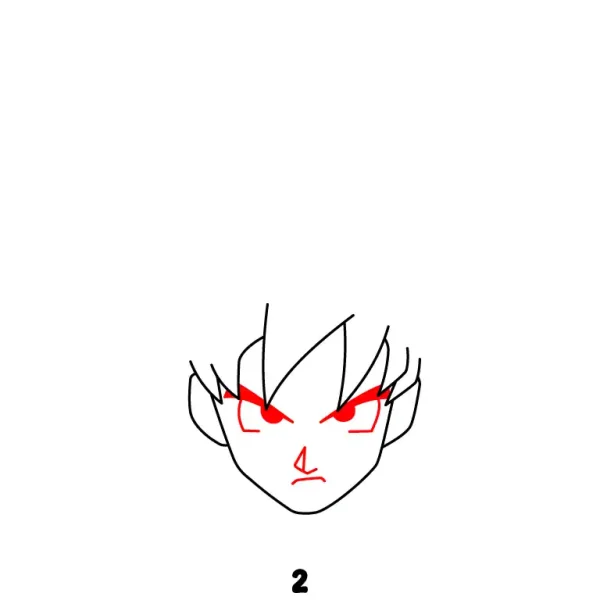
Step 2 - Draw Facial Features and Eyebrows
Add his intense eyes with a narrow shape, then draw his sharp eyebrows positioned firmly above them. Sketch the small nose in the center of the face and add the mouth below, giving him a determined expression.
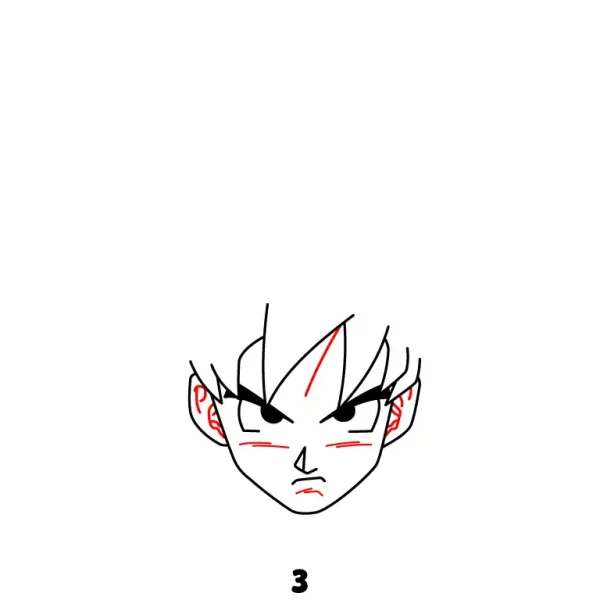
Step 3 - Detail the Eyes, Nose, and Add Hair Strands
Refine the eyes by shaping them neatly and adding the pupils inside. Emphasize the eyebrows by making them thicker and sharper. Add inner details to the ears for depth, and sketch a few defining hair strands to enhance his spiky hairstyle.
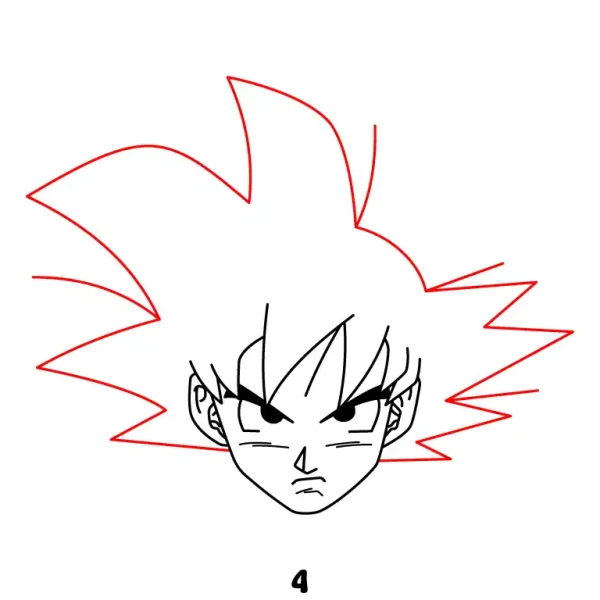
Step 4 - Complete the Full Hair Outline
Extend the hair around his head with large, spiked strands, making them bold and pointed in different directions. Follow his iconic hairstyle by varying the size and angle of the spikes to create a dynamic look.
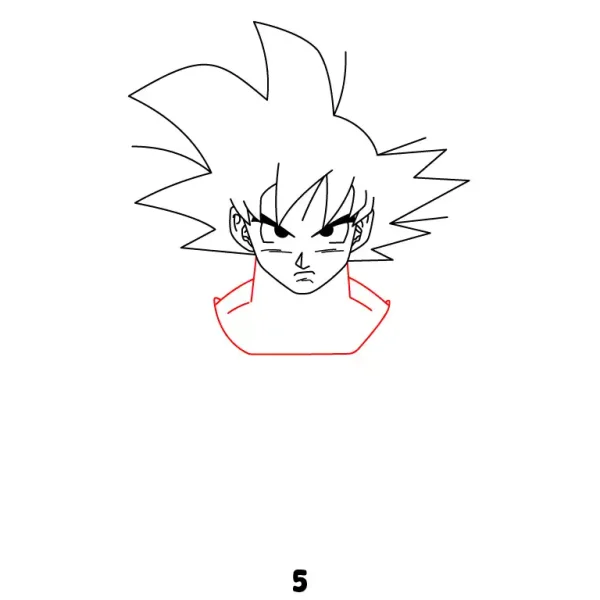
Step 5 - Sketch Goku's Neck and Collar
Draw the neck extending down from the head, keeping it strong and proportionate. Then, add the collar of his outfit at the base of the neck to begin forming the upper body structure.
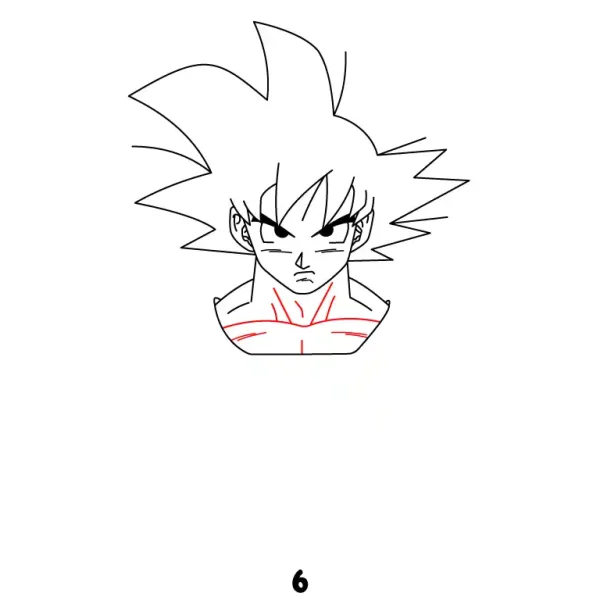
Step 6 - Define Neck Muscles
Add muscular details on the neck by sketching two strong vertical lines to represent the tendons. Include slight curves and shading lines on the sides to emphasize the neck’s strength and definition.
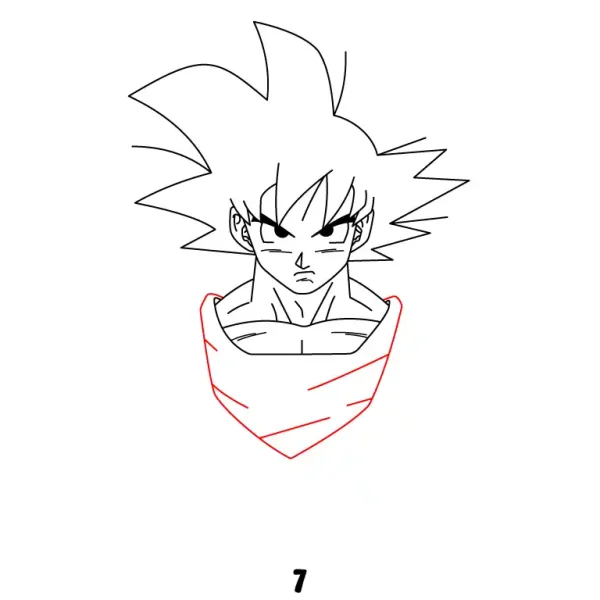
Step 7 - Outline the Upper Torso
Sketch the upper torso by outlining the broad chest, keeping the build strong and proportionate. Begin drawing the top of the outfit, shaping the fabric around his muscular frame while leaving room to show his defined build underneath.
Step 8 - Add Clothing Details on Torso and Sleeves
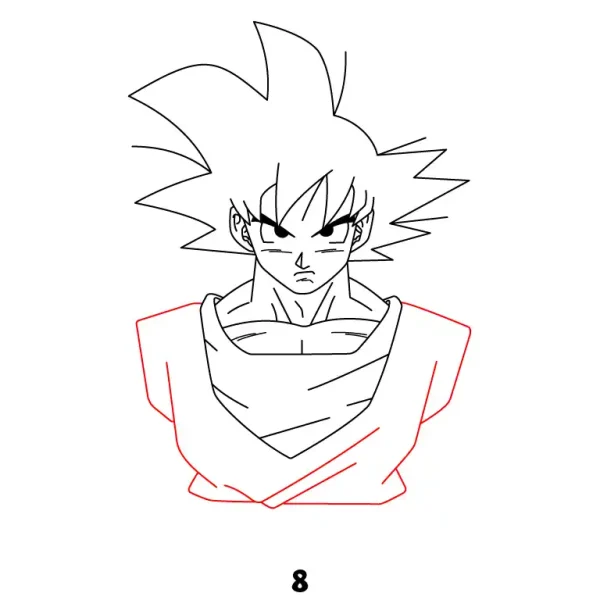
Draw the details of the clothing by adding folds along the fabric to show natural movement. Sketch the wrap across his upper chest, making sure it crosses neatly. Then, outline the sleeves, adding creases and folds to complete the outfit’s structure.
Step 9 - Outline the Waist and Clothing Wrap
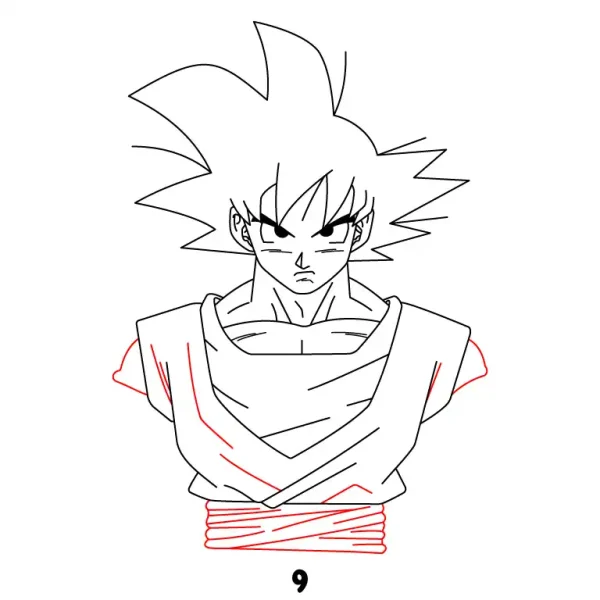
Add the waistline just below the upper torso, keeping it proportionate with his body. Draw the wrap lines around his lower torso to represent his belt or waist tie, making sure they overlap neatly and give a secure, tied appearance.
Step 10 - Draw Upper Arms and Forearm Bands
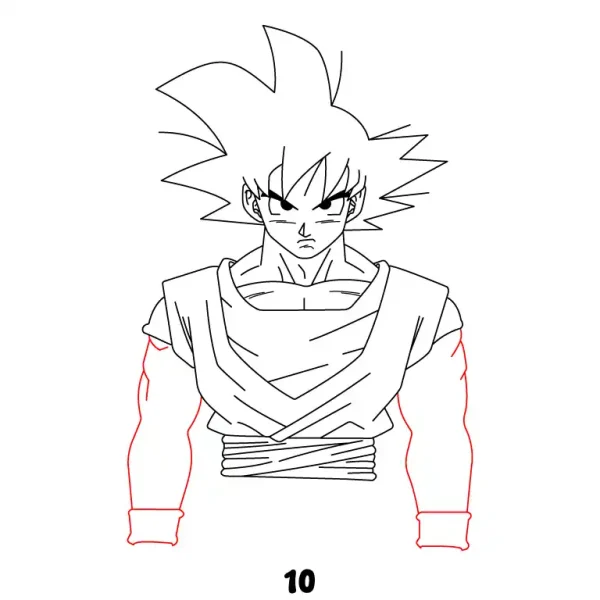
Extend both arms downward from the shoulders, shaping them with clear outlines of the biceps and forearm muscles. Add the bands around his forearms, making sure they wrap firmly and include slight folds for a natural look.
Step 11 - Add Arm Muscle Details and Adjust Forearm Bands
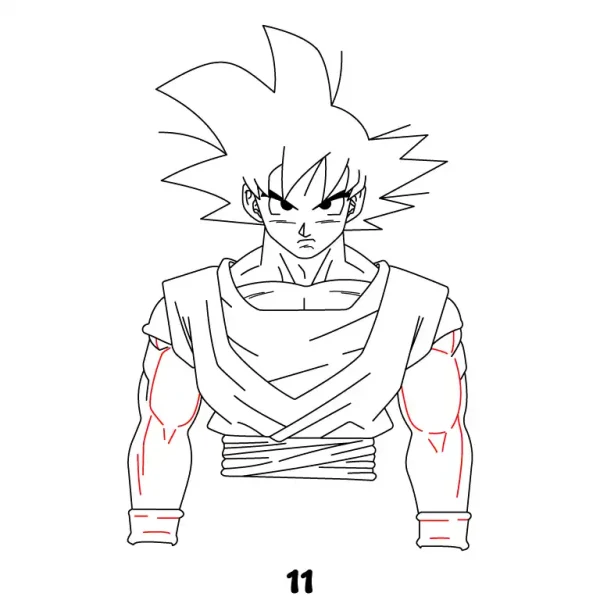
Refine the arm muscles by adding more definition to the biceps, triceps, and forearms with smooth, curved lines. Enhance the forearm bands by sketching slight folds and layered edges.
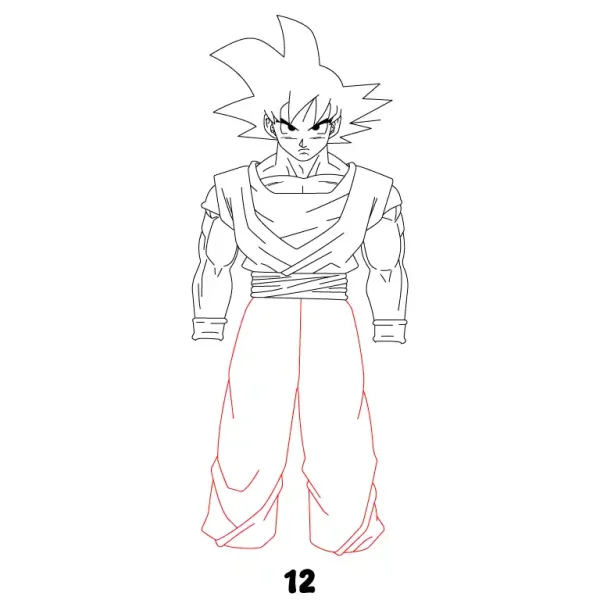
Step 12 - Begin Drawing the Pants
Start sketching the loose pants extending from the waist, keeping them wide and flowing. Add visible folds and creases along the fabric to give the pants a natural, dynamic look that matches his martial arts outfit.
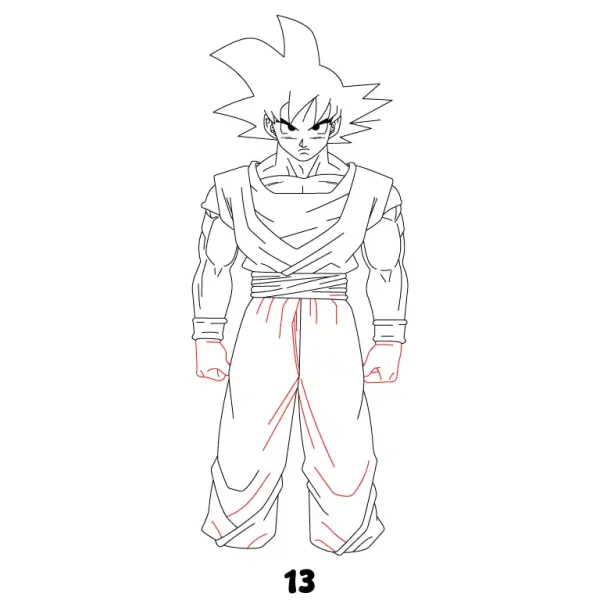
Step 13 - Continue Detailing Pants
Add more folds and creases along the pants, especially around the knees, thighs, and near the waistline. Vary the length and direction of the lines to enhance the realism of the fabric and emphasize the loose, flowing style of the outfit.
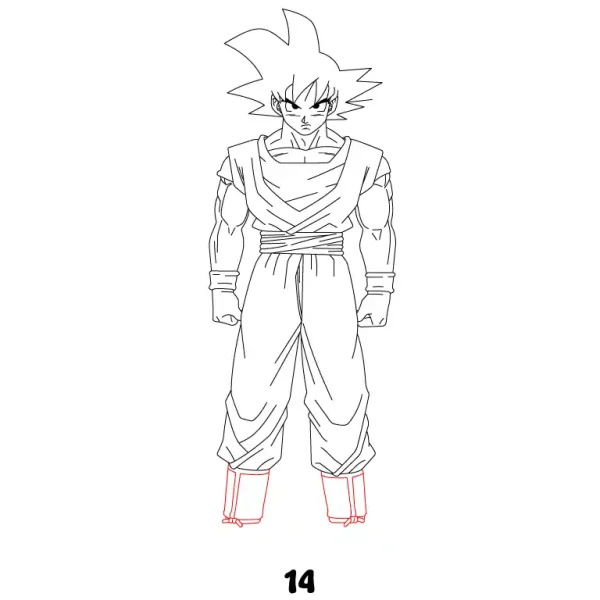
Step 14 - Draw Ankles Cuffs
Sketch the cuffs around the ankles by drawing horizontal bands at the bottom of the pants. Make them slightly tight to show the fabric bunching above, and add small folds to give a natural, wrapped look.
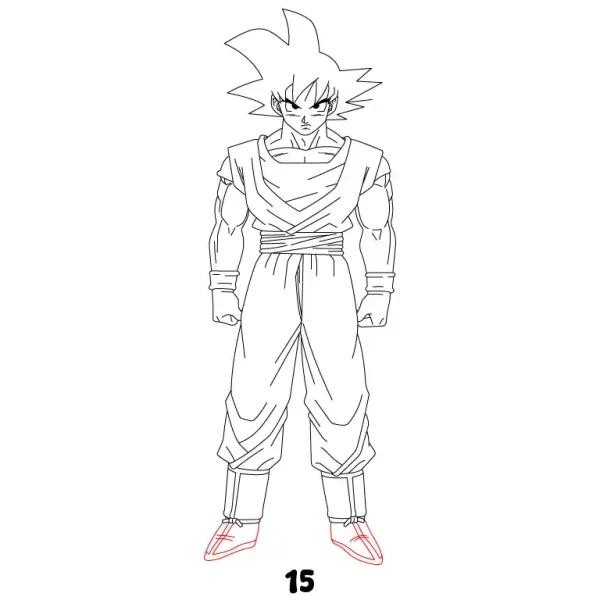
Step 15 - Draw the Shoes
Draw the shoes at the bottom of the pants, giving them a rounded, sturdy shape. Add the laces across the top and include details like the sole lines and stitching to finish the footwear cleanly.
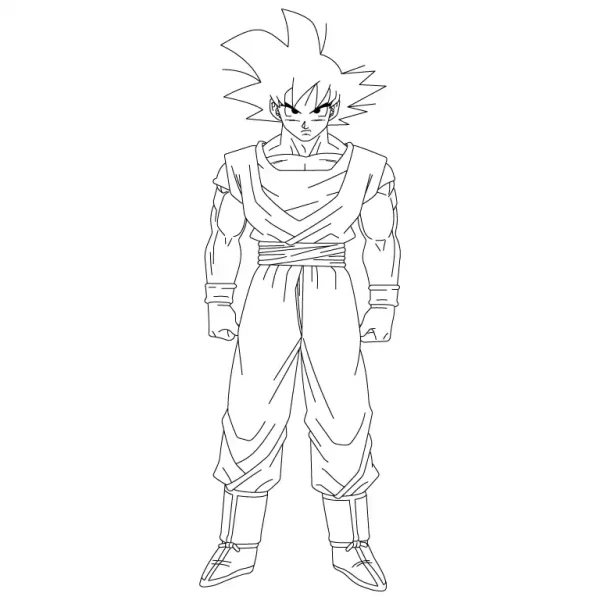
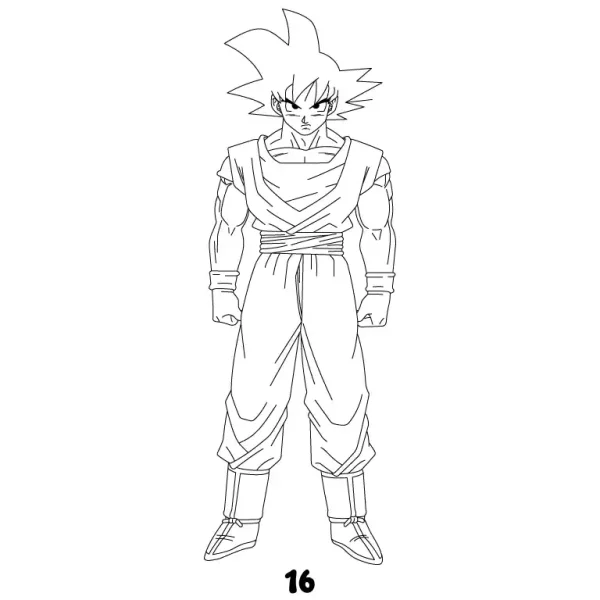
Step 16 - Finalize Goku Drawing
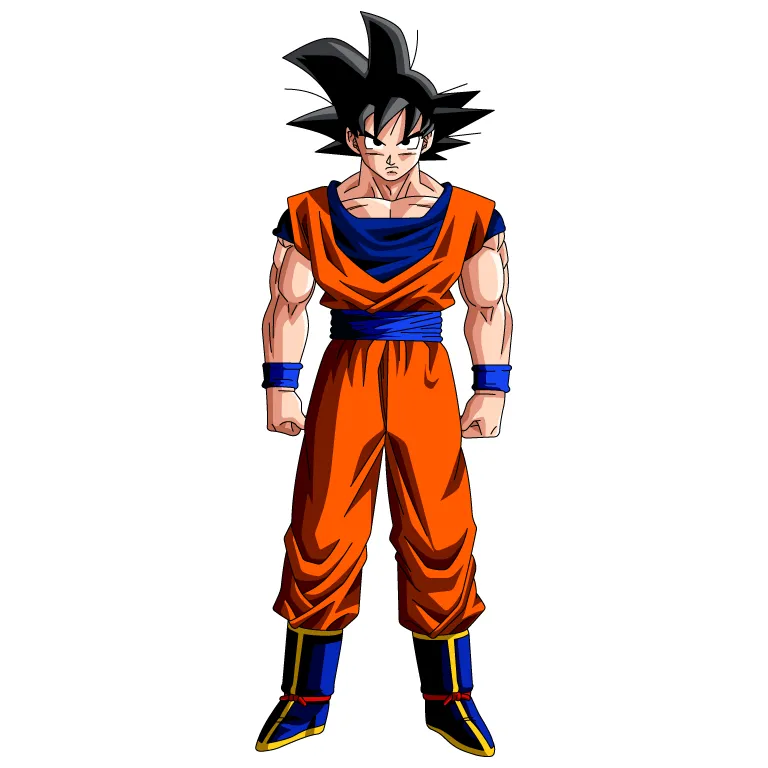
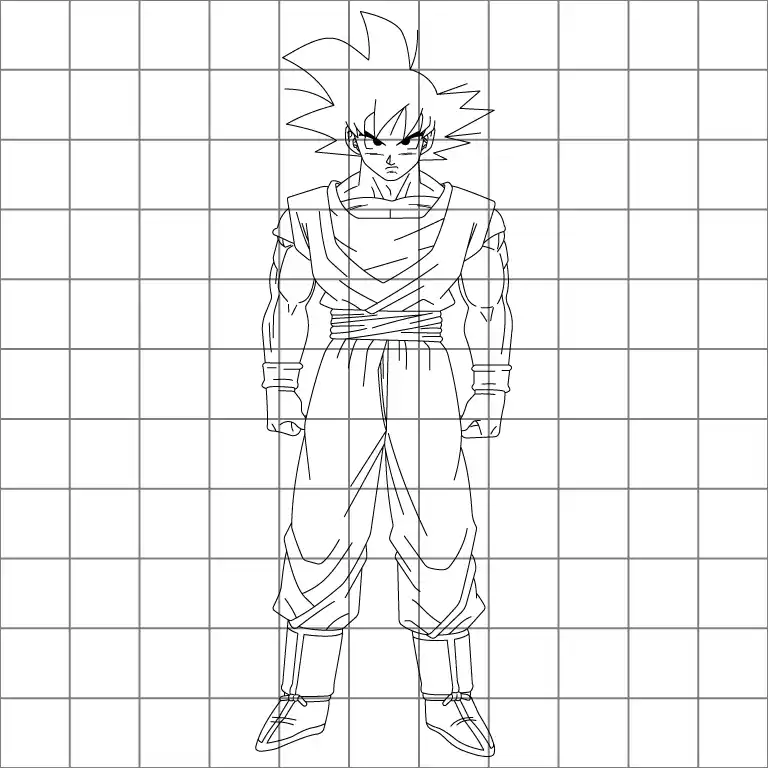
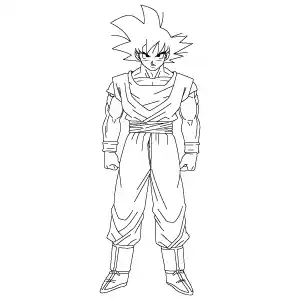
Review the entire drawing carefully, enhancing all outlines to make them clean and bold. Refine the hair spikes, facial features, and muscles for sharper detail. Strengthen the folds in the clothing, define the waist tie, cuffs, and shoes, and ensure everything is symmetrical. Finalize the illustration so it is fully ready for coloring or shading.